WASHINGTON (Reuters) – Předseda panelu Sněmovny reprezentantů pro Čínu sdělil americkému ministru obchodu Howardovi Lutnickovi, že obnovení prodeje čipů Nvidia (NASDAQ:NVDA) H20 do Číny ohrožuje rozvoj umělé inteligence v Pekingu, čímž ještě více zostřil svou kritiku tohoto rozhodnutí a označil původní zákaz za „správné rozhodnutí“.
Republikánský kongresman John Moolenaar v pátečním dopise Lutnickovi varoval, že čipy by mohly oslabit výhodu USA v oblasti umělé inteligence a pomoci čínským společnostem získat podíl na globálním trhu s modely umělé inteligence.
„Ministerstvo obchodu učinilo správné rozhodnutí, když zakázalo čipy H20,“ uvedl Moolenaar v dopise, v němž požadoval další informace. „Nemůžeme dovolit (Komunistické straně Číny), aby americké čipy používala k výcviku modelů umělé inteligence, které budou pohánět její armádu, cenzurovat její občany a podkopávat americké inovace.“
Oznámení společnosti Nvidia z tohoto týdne, že bude moci obnovit prodej, zvrátilo vývozní omezení zavedené Trumpovou administrativou v dubnu, které mělo zabránit tomu, aby se pokročilé čipy pro AI, jako je H20, dostaly do rukou Číny z důvodu obav o národní bezpečnost, což je otázka, která se těší vzácné podpoře obou politických stran. Vyvolalo to rychlé otázky a kritiku ze strany amerických zákonodárců, včetně Moolenaara, který v pondělí uvedl, že bude požadovat „vysvětlení“ od ministerstva obchodu.
Everything in moderation – an old truth that investors rarely remember. Except when good becomes too good. That is precisely what is happening with the US stock market right now.
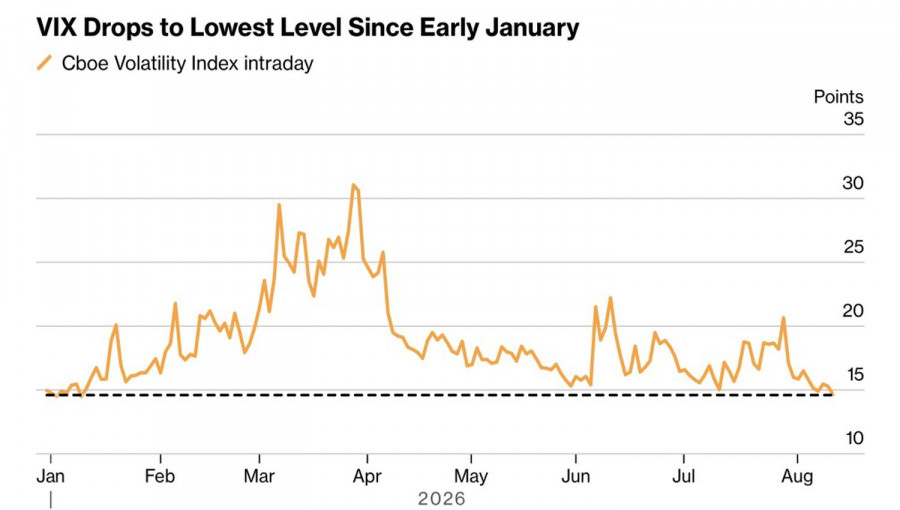
VIX Fear Index Dynamics
The S&P 500 and Nasdaq 100 closed near record highs, led by the technology sector. The Cboe Volatility Index fell to its lowest since January: investors are buying little protection against a crash, betting on market stability in the foreseeable future. A softer inflation report helped – core CPI rose by 2.5% year-over-year, the slowest pace since March 2021. Chipmakers also supported the rally: Nebius shares surged by 34%, CoreWeave gained 19%. Computing power shortages are already translating into pricing power across the AI infrastructure space.
However, behind the facade of records lies an unexpected source of concern. According to Bank of America, the second quarter was one of the best three-month periods in recent history – corporate profits rose by more than 30%. Yardeni Research raised its S&P 500 target to 8,400 from 8,250 and lifted its earnings forecast to $375 per share from $330. The firm noted that consensus earnings estimates have never been revised upward so quickly, resulting in a paradoxical "earnings crash" pushing US indices to new highs.
S&P 500 Earnings Growth
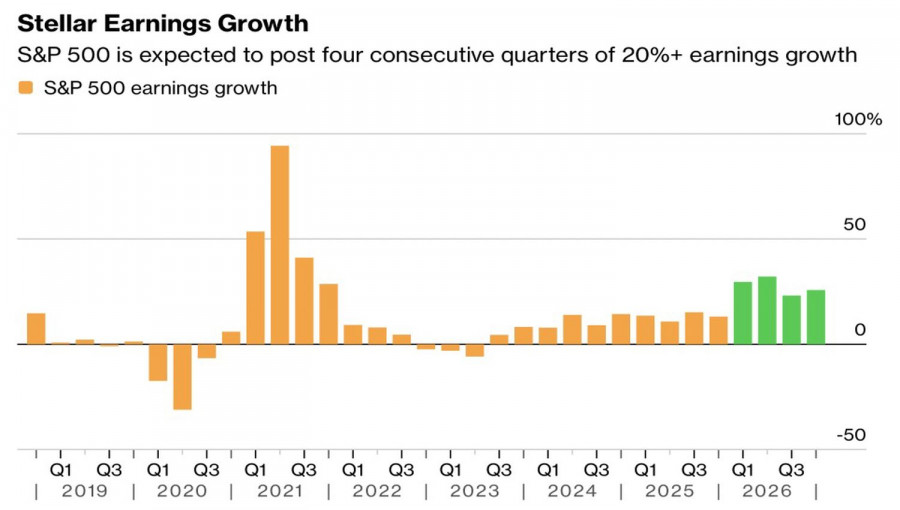
Yet it is precisely this speed that is troubling Wall Street. Such a frenetic pace historically does not last long. According to Bank of America calculations, earnings growth will drop below 20% as early as the first quarter of 2027. Equity markets are rarely kind when earnings growth decelerates from elevated levels. When EPS grows above trend but slows, the S&P 500's average 12-month return falls to 6.7%, compared with 14% during acceleration phases, according to the bank's data going back to 1936.
Moreover, there have been only ten streaks of four consecutive quarters with earnings growth above 20% in ninety years, and nearly all followed deep earnings recessions, including COVID-19 and the 2008 global financial crisis. The market appears to have accelerated faster than it expected, and now it fears not a decline, but a deceleration of its own pace.
The Fed, meanwhile, is gaining maneuvering room: market pricing for a September federal funds rate hike stands at 40%, down from 50/50 following the inflation data. The weak jobs report allows FOMC doves to feel confident.
Should we trust records built on earnings that have outgrown themselves? I'm not sure.
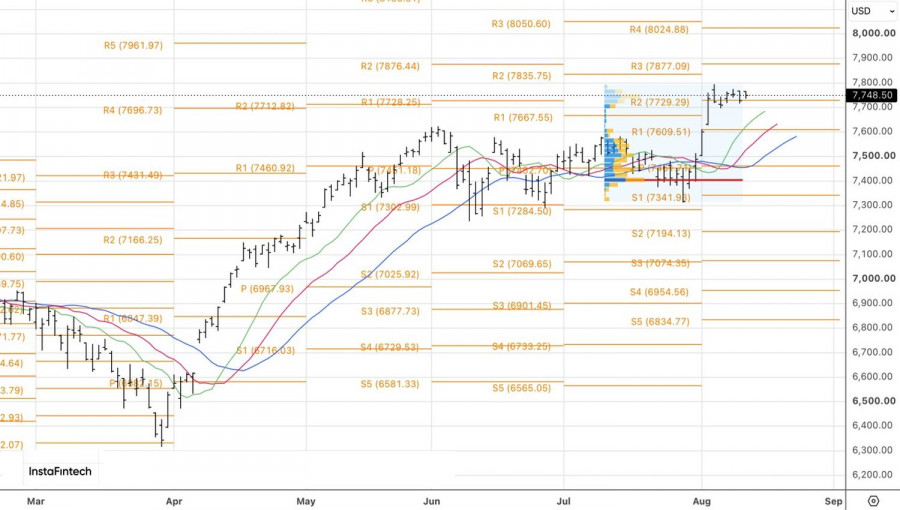
Technically, on the daily S&P 500 chart, a spike and ledge pattern is forming on a 1-2-3 base. It makes sense to place pending orders on a breakout of the short-term consolidation range of 7,710-7,770, buying from the upper bound and selling from the lower.